



What is Display Advertising?
Display advertising is a form of advertising in which the advertiser displays their products and services through images, texts, or URLs on different platforms. Depending on the goal of the campaign, the advertisement may encourage people to make a purchase, fill out a form, or visit a website to learn more about these products and services. Basically, it creates an action on the part of the user.
Display ads have a broad scope and help advertisers target a large audience. In addition to this, this advertising format also helps with behavioral targeting. This means that you can target a specific audience by displaying your ads on websites they are most likely to browse.
What Are the Benefits of Using Display Advertising?
The display advertising market is projected to grow by 30% in 2025 compared to 2023. So, logically, every business owner ought to invest in this advertising format. But why is it growing at such a fast pace? It is due to the incredible benefits mentioned below:
-
Improves Brand Visibility:
By opting for display advertising for your business, you advertise your products and services to a large set of potential customers. Even though the viewers don’t make a purchase after viewing your offerings, your efforts put the product and services at the forefront, which improves their overall visibility.
-
Helps Reach a Highly Targeted Set of Audience:
Display ads help you reach a specific audience based on their location, demography, gender, age, and online behavior. By targeting audiences based on these characteristics, you ensure that the ads are displayed to the people who are truly interested in your products. This increases their likelihood of conversion, and advertisers enjoy an optimal ROI.
-
It is Highly Cost-Effective:
Display ads are highly flexible. This means that you can customize even the cost-per-impression and cost-per-click along with the overall budget of the ad. Moreover, if you want to cut down on your display ads budget, you can do that easily as well.
-
Helps You Avail Real-Time Analytics:
With these ads, you can also avail of real-time analytics that will help you improve your performance. Some of the most crucial metrics that you can check for your display ads are click-through rates, conversion rates, and ad impressions. These metrics help advertisers make an informed decision for future campaigns.
Different Types of Display Advertisements
Here are the different types of display ads that you, as a business owner, can consider for your products and services:
-
Banner Ads:
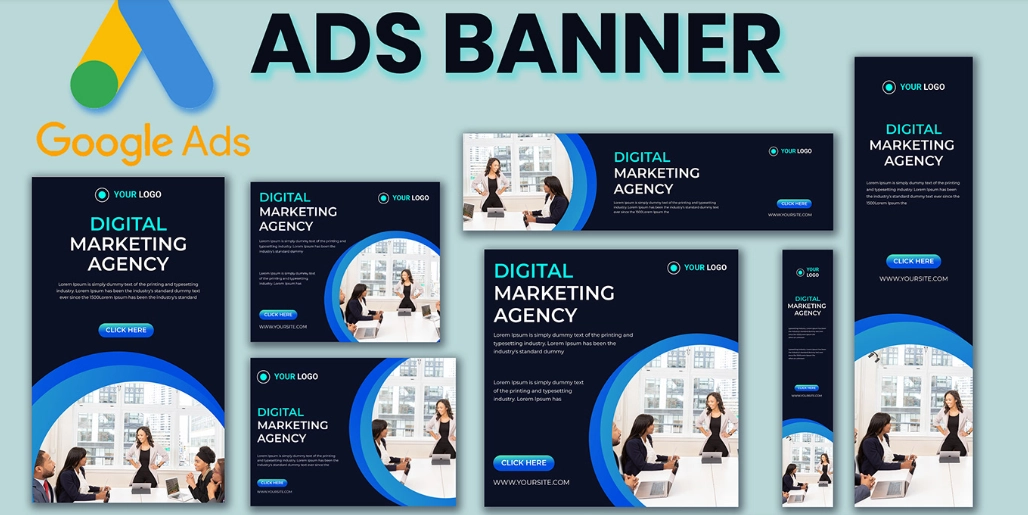
As the name suggests, banner ads are banner-like displays for websites. In this type of advertising format, the displayed ad is in the form of a banner. Banner ads are cleverly displayed at the top or the sides of a website so that they are instantly visible to the website visitors. These ads have images and a hyperlink that takes the target audience to the advertiser’s website.
-
Video Ads:
Video ads are video advertisements displayed on a website. They are slightly more expensive than banner ads but are worth the investment. They use visuals and sound to grab the attention of the viewers, which makes them more effective than any other form of display advertisement. Moreover, they are highly versatile, meaning that you can display them on social media platforms and websites and even make them appear as pop-ups.
-
Rich Media Ads:
Rich media ads combine video, audio, and other interactive elements to make the advertisement more engaging. Together, these additional elements work as an x-factor for the content and make it more clickable.
-
Interstitial Ads:
These ads appear on a different page before directing users toward the original webpage that the viewer initially wanted to visit. As they take up the entire webpage, these types of ads are the most effective in grabbing the viewer’s attention.
Key Metrics To Measure the Performance of Your Display Ads
If you want to optimize the allocation of resources on your display ads, you must closely monitor the key metrics. Doing so will help you understand where you may be going wrong on your display ads if you are not seeing positive results:
-
Ad impression: Ad impressions mean the number of times your ad was displayed on a website. This metric helps you understand how effective your campaign is. If you are not seeing consistent growth in the ad impressions, chances are that you are doing something wrong and must immediately pay attention to it.
-
Click-through rate: CTR is the percentage of people who have viewed your ad and decided to click on it. The CTR of your website displays how engaging the content on your website is and how appropriately you are able to target a set of audiences who will truly be interested in your products.
-
Cost: You should have a clear idea about the optimal cost-per-impression and cost-per-click of your website. This ensures that you stay within the budget and enjoy a significant profit.
How To Successfully Launch Your Display Advertising Campaign?
To launch your display advertising campaign, you must work with an ad network such as the Google Display Network (GDN). Partnering with GDN gives you the opportunity to display your ads on more than 200 million sites, videos, and apps. After this, you must follow the steps mentioned below:
-
Define Your Target Audience:
This step is the foundation on which you decide the entire route of your display advertising campaign. Defining your target audience will ensure that your ads reach the right audience group.
To define your target audience, you need to create a customer persona, a semi-fictional character who closely resembles your ideal customer.
For instance, if you are a health and fitness brand, your ideal customer will be someone who works out regularly and has a healthy diet. This information will allow you to display your ads on health and fitness-related websites that the target audience is most likely to visit.
-
Campaign Goal:
The next thing you must consider for a successful display advertising campaign is its goal. If your goal is to increase brand awareness, it is best to display your ads on websites that have a large incoming traffic. On the other hand, if your goal is to increase sales, it is best to re-target the websites that had the maximum conversions.
Taking a goal-driven approach to your advertising campaign ensures that you stay on track.
-
Carefully Select the Ad Type and Placement:
Where you place your display ad and what type of ad you choose to display plays an important role in how many customers you attract.
First comes the placement. Your display ad should be placed on a relevant website. To determine the site’s relevance, you need to check whether it aligns with the interests of the target audience. The website must also have a decent flow of incoming traffic. The ad should also be displayed in a way that is easily visible to visitors.
The second thing to consider is the type of ad. As mentioned above, businesses can make use of several kinds of ads and pick the one that suits their needs. Advertisers must make this decision based on their budget and which type will resonate the most with their target audience.
-
Rightly Setting the Budget:
Every advertiser’s ultimate goal is to maximize the return on investment generated from their display ads. To achieve this goal, the budget of the ad campaign needs to be allocated efficiently.
When you are allocating a budget, check the platform that you are using. Different platforms have different pricing models. Some may have a cost-per-click model, while others may have a cost per 1000 impressions model. Based on the pricing model that you have chosen, you need to pick a plan that aligns with your budget and goal.
-
The Visuals Make a Lot of Difference:
The technical aspect of your display ad campaign is important. However, at the same time, you need to ensure that the visuals strike the right chords in your audience’s heart. For that, you have to go back to what your target audience will like. Moreover, there is a complex color theory that goes into play when crafting the visuals of your ad. For instance, red is a great color to grab the attention of your customers, but red also triggers feelings of anger. Although these are minute details, they play an essential role when it comes to crafting an effective campaign.
-
Continuously Monitor and Optimize Your Content:
If you want to know the secret behind how advertisers consistently maintain positive ROI from their ad campaigns, the answer is consistent monitoring. With display ads, you have a lot of real-time data that is easily available. Keep a close eye on the key performance indicators, such as click-through rates and cost-per-click. Along with this, also keep a close eye on which ads are performing exceptionally well and which are not. When an ad doesn’t perform the way it is expected to, you must check the landing page for any problems. Also, the visuals of the ad can be tweaked by conducting A/B testing to get a better result.
Best Practices for Display Ads
-
Always Prioritize the Audience’s Experience:
No matter which tactic you are using, you need to prioritize your audience’s experience. For a better experience, you must avoid autoplay video ads and pop-ups that impact the audience’s browsing experience. Moreover, always ensure that customers can easily close your ad if they don’t want to see it. Another thing that you need to consider is that your ads shouldn’t cover the maximum portion of the screen. As a rule of thumb, the ads shouldn’t exceed more than one-third of the entire screen. High ad density may help you get your ads noticed, but not how you want to.
-
Quality Over Quantity:
Every successful advertiser will agree to this practice. Rather than displaying your ads on every platform, focus on the websites that are contextually relevant. On top of that, you must also focus on the visuals, readability, and messaging of the ad. Having one quality ad display is much more effective and impacts the ROI significantly.
-
Always Add a Strong CTA:
CTA gives direction to your audience about what action they should take after they have viewed your ad. Here is how you can make your CTAs better:
-
Your CTA should describe a benefit: If your target audience doesn’t benefit from your ad, they won’t be encouraged to click on it to learn more about your products and services. CTAs like “download the free audiobook” or” get 50% off” directly communicate how the audience will benefit from the ad, encouraging them to click on it.
-
Create an urgency: CTAs like “limited offer” or “offer valid till midnight” create a sense of urgency and encourage the audience to click on the ad.
-
A Simple Design for the Win:
Simplicity always wins the race when it comes to display ads. Too many design elements and fonts overwhelm the user and divert attention from the ad’s main goal. Hence, focus on a design that clearly displays the ad’s goal without distracting the audience.
Is Display Advertising the Future of Advertising?
Display ads have undergone a remarkable change. What started as banner ads placed on walls and buildings in the 1990s has evolved into ads that precisely target the online audience based on their interests and demographics.
With programmatic advertising becoming popular in the mid-2010s, display ads have become more cost-effective and highly targeted. One of the major reasons advertisers love display ads is their flexibility and how easy it is to monitor the progress of the ad campaign. The display advertising market is continuously growing, and at present, if you are not investing in display ads, you are missing out on a lot of potential clients.